
Jackson County Arrest Records and Court Charges
Jackson County arrest records start with law enforcement and booking. They may show that a person was taken into custody, booked into the jail, or processed after a warrant or arrest. The formal court charge record is different. It begins when a prosecutor, officer, magistrate, or grand jury path turns the event into a charge that can be tracked through court. That charge may appear in a jail entry, warrant proceeding, Magistrate first appearance, accusation, indictment, or Superior or State Court docket before a final outcome exists.
The Jackson County Sheriff's Office and Jail Division handle the custody side. The Piedmont Judicial Circuit District Attorney represents the State in Superior Court criminal cases and helps explain who prosecutes felony charges after arrest. The Clerk of Superior Court keeps the court file once the case is filed. For the full criminal case file and sentence, use the criminal court record. For current custody status, use the inmate search path.
The Jackson County Sheriff's Office is the official county law-enforcement source tied to arrest and jail routing.

The Sheriff's Office source supports the custody side of Jackson County arrest records, while court charges are tracked through court channels.
Find Jackson County Arrest Records and Charges
Use more than one channel when checking Jackson County arrest records and court charges after arrest. The officially linked OffenderIndex portal can show current inmates, bookings over the last 24 hours, and inmates by booking date. That is a booking and custody tool, not a complete charge-disposition database. To see how charges move through court, use the Clerk of Courts case search, Georgia Courts e-access, PeachCourt, Magistrate Court for warrant and first-appearance matters, or the court listed on the notice.
- Check the jail or OffenderIndex path if the question is recent custody or booking status.
- Search the court case route by defendant name, case number, court type, and filing timeframe.
- Read the charge list and note whether it came from a warrant, accusation, indictment, or other filing.
- Check each charge's current status, including pending, amended, reduced, dismissed, or nolle prosequi.
- Request certified court copies from the Clerk of Superior Court when the record is needed as proof.
OffenderIndex for Jackson County is the inmate booking lookup linked from the Sheriff's Jail Division page.
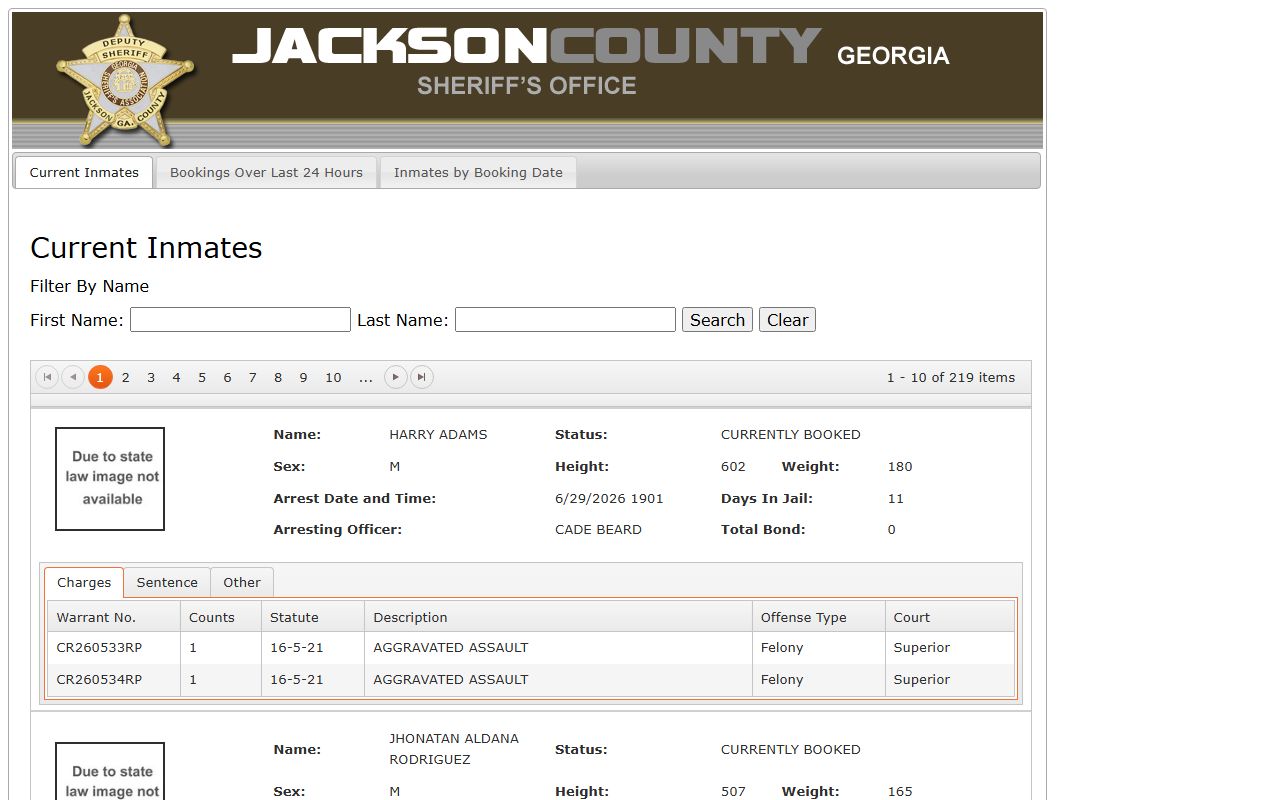
The booking lookup can support an arrest-record search, but it should be paired with court records for filed charges and outcomes.
Charges After Arrest Documents
Charges after arrest usually enter the court record through a charging document or court action. Georgia terminology in the research includes indictment and accusation, and the warrant process can begin in Magistrate Court. A complaint or warrant application may start a lower-court or preliminary matter. An accusation is prosecutor-filed. An indictment is a grand-jury felony charging document. These papers are accusations, not proof of guilt.
| Complaint or Warrant Paperwork | Accusation | Indictment | |
|---|---|---|---|
| Filed By | Officer, applicant, prosecutor, or Magistrate process depending on matter. | Prosecutor. | Grand jury. |
| Common For | Warrants, preliminary matters, first appearances, and some lower-court cases. | Many criminal prosecutions that proceed without indictment. | Felony matters requiring grand-jury charging. |
| Where it appears | Magistrate Court, jail entry, warrant record, or early docket. | State or Superior criminal case file. | Superior Court criminal case file. |
| What it means | A formal step that can start court action. | The prosecutor's filed charge. | The grand jury's formal charge. |
Jackson County Charge Status Terms
A charge can change after arrest. It may be pending at first appearance, amended after review, reduced through negotiation, added after more review, dismissed by court order, or nolle prossed by the prosecutor. In Jackson County, the best source for the current charge status is the court docket or certified disposition, not an old booking entry. A jail roster can lag the court result or omit the final disposition.
| Status | What It Means |
|---|---|
| Pending | The charge has been filed or listed, but no final outcome is shown. |
| Amended | The charge text, count, or offense level changed after filing. |
| Reduced | The charge moved to a lower offense or lesser count. |
| Dismissed | The court or prosecution ended that charge without conviction. |
| Nolle Prosequi | The prosecutor chose not to pursue the charge. |
| Convicted | A guilty plea, guilty verdict, or similar finding produced a conviction and sentence. |
The Sheriff's Jail Division page links the booking lookup and identifies jail contacts for custody questions.
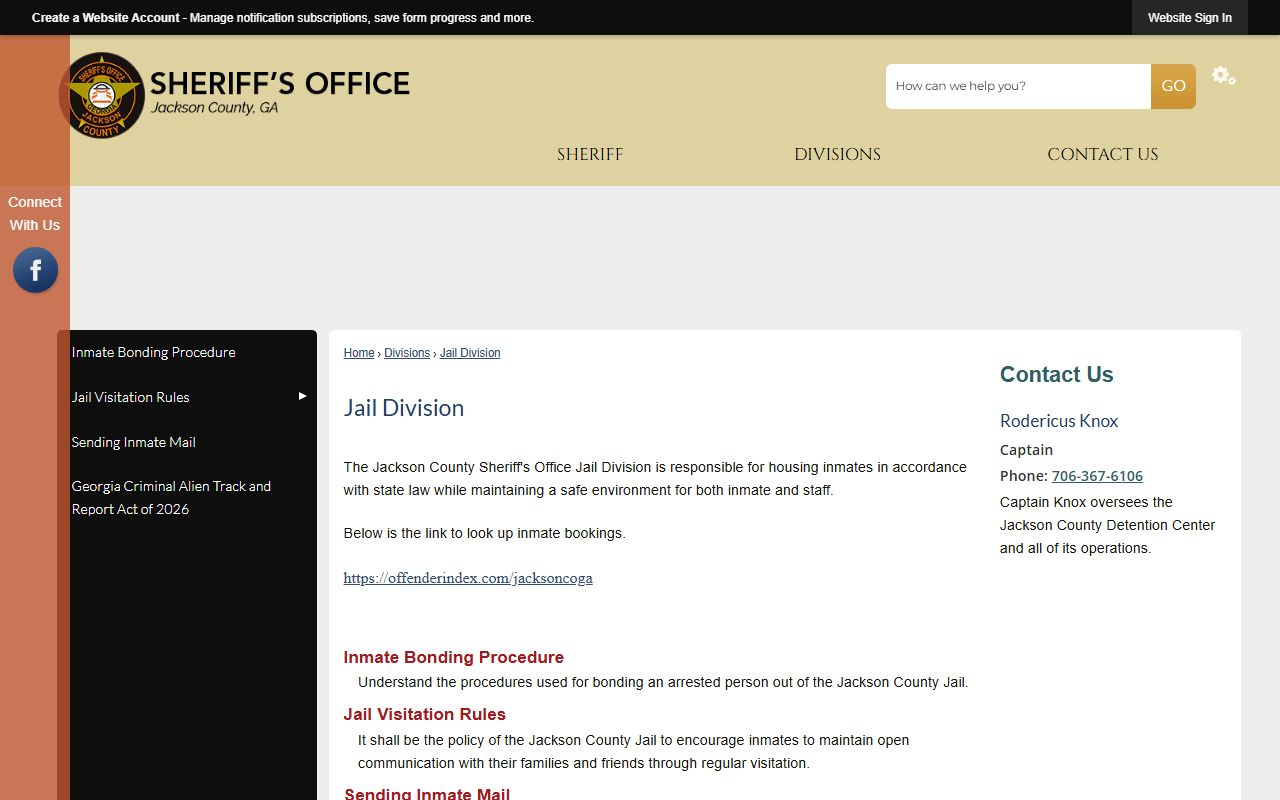
The Jail Division source helps with booking and custody, but final charge status still belongs in the court record.
Charges vs Convictions in Jackson County
Jackson County arrest records and court charge records should not be read as convictions unless the court disposition says so. A charge is an accusation filed after an arrest, warrant, complaint, accusation, or indictment. A conviction is a final guilty outcome. One arrest can produce several charges, and each charge can end in a different way. A person can have one count dismissed, another reduced, and another resolved by plea.
| Charge | Conviction | |
|---|---|---|
| Stage | Before final outcome. | After guilty plea, guilty verdict, or similar final finding. |
| Proof level | Accusation or probable-cause stage. | Final court outcome beyond the accusation stage. |
| Record source | Booking, warrant, accusation, indictment, or docket line. | Disposition, judgment, sentence, or certified court copy. |
| Risk of misread | May be dropped, reduced, amended, or dismissed. | Still may be appealed, restricted, or affected by later orders. |
Statewide Charge and Custody Lookups
Statewide tools are helpful only when used for the right purpose. The Georgia Department of Corrections Find an Offender search is for sentenced state-prison custody, not county jail booking. Georgia.gov also notes that county jail inmates should be checked through the county website. The GBI sex offender registry is separate from current custody and is managed under a different law. The Bureau of Prisons locator covers federal inmates, not Jackson County jail custody.
Georgia Department of Corrections offender search is the state-prison lookup source for sentenced offenders.
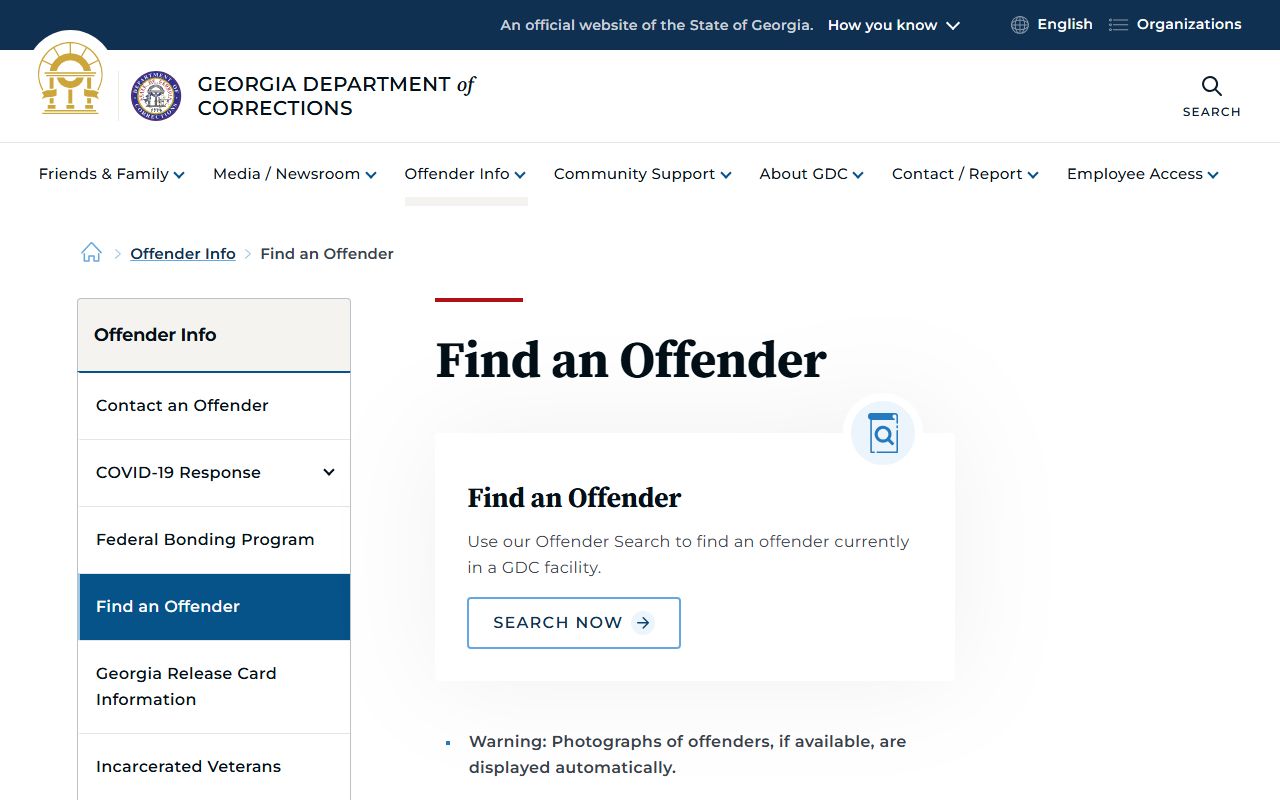
The GDC source is useful after state-prison sentencing, but it is not the first source for a new Jackson County arrest.
Georgia.gov's find-an-offender page explains the distinction between state offender searches and county jail sources.
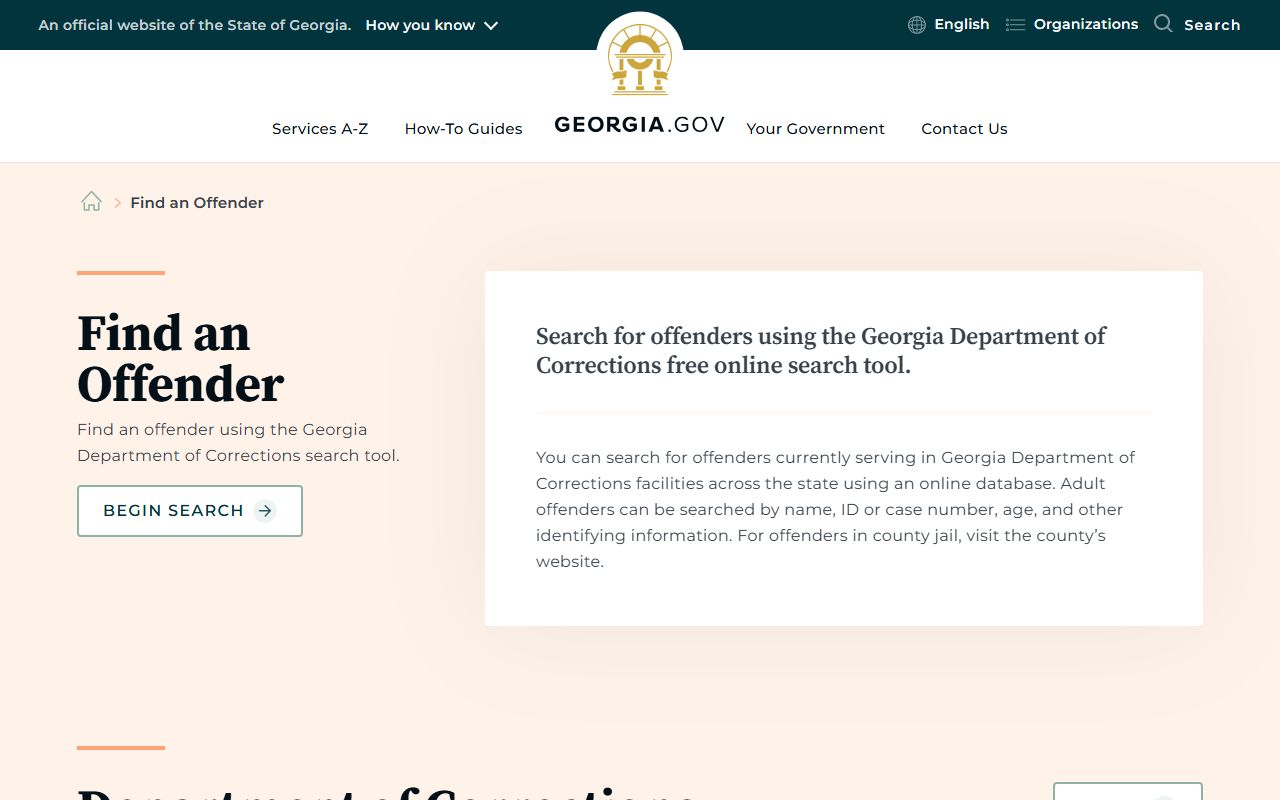
The Georgia.gov source reinforces that county jail booking questions should go through Jackson County sources first.
Restricted Arrest and Charge Records
Georgia record restriction can affect criminal-history access, but it is not the same as deleting a court case. The GBI record restriction page says arrests after July 1, 2013 are handled by contacting the prosecutor, while older arrests start with the arresting agency. Jackson County Superior Court prosecutions involve the Piedmont Judicial Circuit District Attorney. Sealed court records require court authority, and juvenile matters are controlled by juvenile law.
| Sealed Court Record | Restricted Criminal History | |
|---|---|---|
| Main effect | Limits public access to the court file or specific entries. | Limits criminal-history access for non-criminal-justice purposes. |
| Who handles it | The court under law or court procedure. | Prosecutor or arresting agency process under GBI guidance. |
| Common examples | Juvenile, adoption, sensitive, or court-sealed material. | Eligible arrests or dispositions under O.C.G.A. 35-3-37. |
| What remains | Some nonsealed data may still exist. | Some court docket entries may remain unless sealed separately. |
Note: A dismissed charge may still need the correct restriction or sealing process before it stops appearing in public channels.
Federal Arrests and Charges
Some arrests or charges tied to Jackson County residents may be federal. Those do not become Jackson County arrest records or county court charge records in the same way. Federal criminal matters go through the U.S. District Court for the Northern District of Georgia, the U.S. Attorney's Office, U.S. Marshals, PACER, CM/ECF, and federal custody systems. A person sentenced to federal custody may be searched through the Bureau of Prisons instead of the county jail or GDC state-prison lookup.
The Federal Bureau of Prisons inmate locator is the source for federal custody, not Jackson County jail custody.
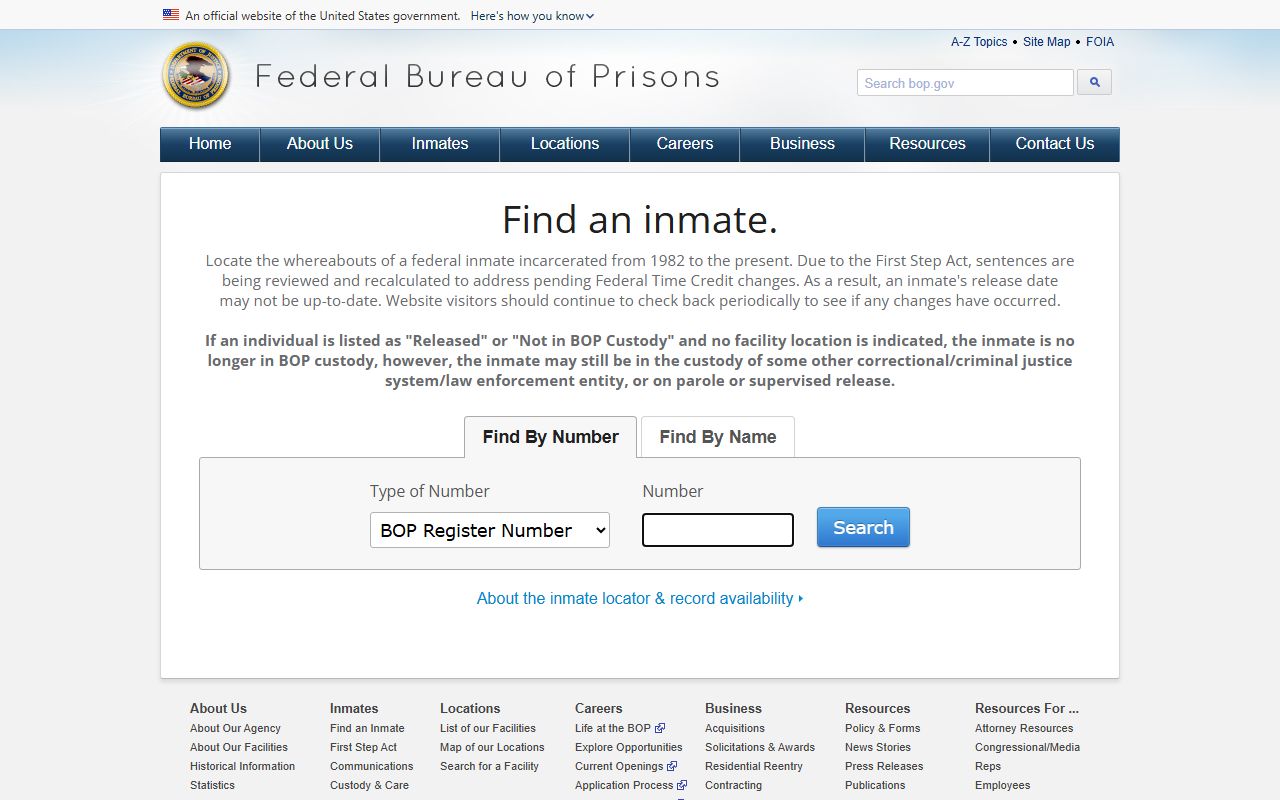
The BOP source should be used only when the matter is federal or the person is in federal custody.
Background Check Limits
Arrest records and court charge records can be misunderstood when used without the final disposition. A booking entry may show custody, but it may not show whether a prosecutor filed every charge. A charge line may show an accusation, but it may not show conviction. A court docket may show dismissal, reduction, nolle prosequi, plea, sentence, or restriction. For official use, request certified copies from the court custodian and verify whether the record is current.
Jackson County users should also separate law-enforcement records from court records when asking for copies. The Sheriff's Office or jail can answer custody, booking, bond, and jail-status questions. Magistrate Court can explain warrant applications and some first-appearance or bond proceedings. The Clerk of Superior Court is the better source for the filed criminal case record, certified dispositions, and archived case files. The District Attorney or prosecutor route matters when a post-2013 Georgia record restriction request must be reviewed by the prosecuting office.
When dates conflict, use the signed court order or certified disposition over a booking summary. Court action controls the charge outcome.
Important: Casual lookup of arrests or charges is not an FCRA-compliant employment, tenant, credit, or insurance background check.