
Jackson County Criminal Court Records
A Jackson County criminal court record is the court file, not just the arrest event. The Clerk of Superior Court keeps Superior, State, Juvenile, and Magistrate records identified in the county research, while the court level determines the kind of criminal matter. Superior Court handles felony prosecutions and the District Attorney's Superior Court cases. State Court handles misdemeanors and many traffic offenses. Magistrate Court handles first appearances, warrant applications, preliminary hearings, bad checks, and bond conditions before or beside the later case file.
The criminal case file is broader than a charge list. It can include accusation or indictment filings, arraignment entries, pleas, motions, orders, verdicts, sentences, probation terms, and appeal entries. The charge detail itself is better covered by court charge records after arrest, while custody status belongs with the jail lookup. For the full case path, Jackson County criminal court records are the source that ties the filing, hearing history, and final outcome together.
Jackson County's District Attorney page explains the Piedmont Judicial Circuit prosecutor's role in Superior Court criminal cases.
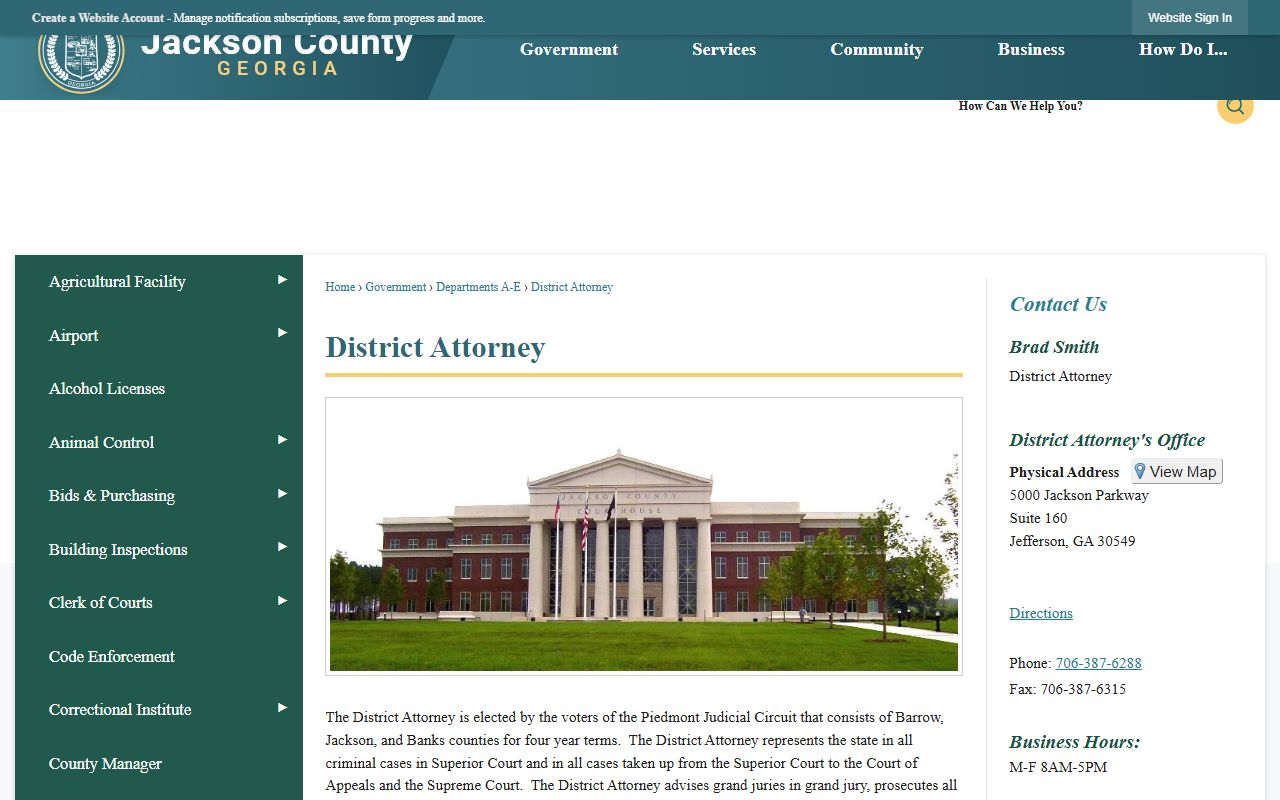
The DA source helps identify who prosecutes felony cases before the resulting court file moves through Superior Court.
Search Jackson County Criminal Court Records
Local criminal court records are searched through the Clerk of Courts site, the clerk's Case Search path, or Georgia Courts e-access routing for Jackson Superior and Jackson State. The state e-access listing directs those courts to PeachCourt. County research reconciles the online language this way: search access exists, but provider account access and payment setup may be required for printing or copies. When the case is older than 1998, call the clerk ahead because archived civil and criminal records may need 24 hours of retrieval time.
- Decide whether the case is a felony, misdemeanor, traffic-related criminal case, warrant matter, or preliminary Magistrate matter.
- Use the clerk's case search or Georgia Courts e-access for Jackson Superior and Jackson State records.
- Search by case number when available, or use the defendant name, court type, and filing timeframe.
- Open the docket and read the charges, arraignment, plea, hearing, disposition, and sentence entries.
- Request certified copies from the Clerk of Superior Court when a docket line is not enough.
Statewide criminal-history material is different from the court case file. The GBI record restriction page explains criminal-history restriction under O.C.G.A. 35-3-37, but a GCIC restriction process is not the same as sealing the court docket.
Jackson County Criminal Case Flow
Criminal court records in Jackson County move by stage. A warrant, arrest, or investigation may come first, but the court file gains meaning when a charging document is filed, an arraignment is held, motions are entered, and the case reaches a plea, trial, dismissal, or sentencing. The District Attorney represents the State in Superior Court criminal cases in the Piedmont Judicial Circuit, while misdemeanor matters can follow the State Court route.
Case flow: Charges Filed › Arraignment › Pretrial / Motions › Plea or Trial › Disposition › Sentencing
| Stage | What Happens |
|---|---|
| Charges Filed | An accusation, indictment, warrant paperwork, or other charging record starts the court case path. |
| Arraignment | The defendant is formally advised of charges and enters a plea. |
| Pretrial / Motions | Attorneys file motions, request hearings, negotiate pleas, or raise evidence and procedure issues. |
| Plea or Trial | The case resolves by plea, bench trial, jury trial, dismissal, or other court action. |
| Disposition | The docket records guilty, not guilty, dismissed, nolle prosequi, acquitted, or other outcome language. |
| Sentencing | The court enters punishment, probation, fines, restitution, custody, or other sentencing terms after conviction. |
What Jackson County Criminal Records Show
A Jackson County criminal court record should be read field by field. A charge line alone does not prove conviction. A docket entry may show a plea or hearing without the full document. The most useful fields are the case number, court, defendant, charge text, offense level, prosecutor, plea, disposition, sentence, and restriction status. Copy fees, certified-copy status, and account limits can affect what a person can print or use as official proof.
| Field | What It Shows |
|---|---|
| Case Number | The court/provider identifier used for search, docket review, and copy requests. |
| Court | Superior, State, Magistrate, Juvenile, or Municipal routing depending on charge and venue. |
| Defendant | The person charged in the court case. |
| Charges | Accusation, indictment, warrant, or charge text filed in the case. |
| Plea | The defendant's formal response, such as guilty, not guilty, or nolo contendere. |
| Disposition | The case or charge outcome, including dismissed, guilty, acquitted, or nolle prosequi. |
| Sentence | Custody, probation, fines, restitution, bond conditions, or other punishment terms. |
| Restriction | Sealing, juvenile limits, protected identifiers, or criminal-history restriction issues. |
Jackson County Charges vs Convictions
Jackson County criminal court records can show charges that never become convictions. A person may be charged, then later have a charge dismissed, reduced, amended, nolle prossed, or resolved by acquittal. A conviction appears only after a guilty plea, guilty verdict, or similar final finding. This distinction matters for employment, licensing, housing, immigration, and record-restriction questions, because a docket can include both accusations and outcomes.
| Charge | Conviction | |
|---|---|---|
| Meaning | An accusation filed after arrest, warrant, indictment, or accusation. | A final guilty finding by plea or verdict. |
| Where it appears | Charging document, docket, jail entry, warrant, or preliminary hearing record. | Disposition, sentence, judgment, probation, or final order entry. |
| Can change | May be amended, reduced, dismissed, or nolle prossed. | May later be appealed, restricted, or affected by post-judgment orders. |
| Proof needed | Docket line may be enough for status checks. | Certified disposition or sentencing order is safer for official proof. |
The Piedmont Judicial Circuit public defender page explains representation for indigent defendants through the circuit.
The public defender source belongs in criminal-case context because it concerns defense representation, not civil records help.
The Georgia Public Defender Council finder is the official statewide directory for locating defender offices.
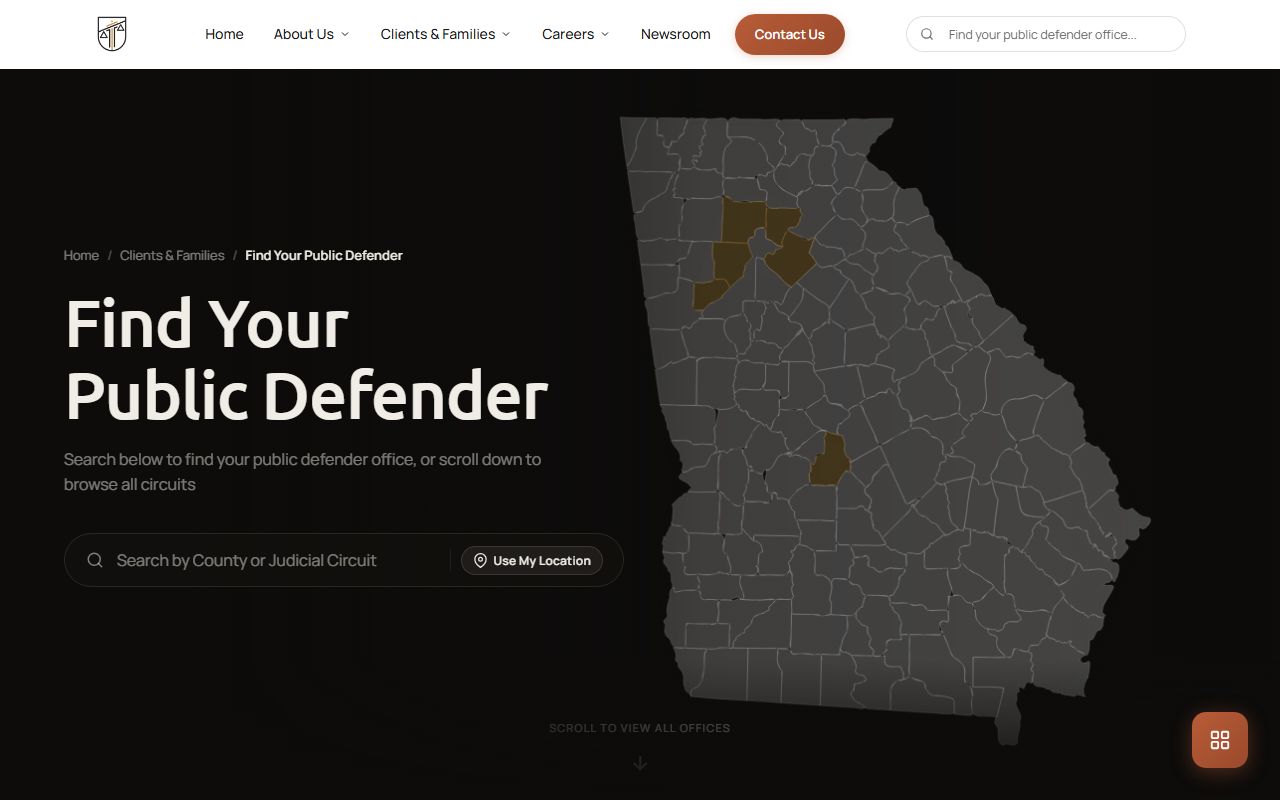
The statewide finder supports the same appointed-counsel path when a Jackson County user needs the current public defender contact.
Sealed vs Restricted Records
Georgia often uses the term record restriction for criminal-history limits. The research distinguishes criminal-history restriction from sealing a court file. GBI explains that for arrests after July 1, 2013, there is no application through the arresting agency, and the person contacts the prosecutor. For arrests before that date, the person applies with the arresting agency. Court-file sealing is a separate court process and can require legal authority under court rules.
| Sealed Court File | Restricted Criminal History | |
|---|---|---|
| Main effect | Limits public access to the court file or part of it. | Limits certain criminal-history access for non-criminal-justice purposes. |
| Path | Requires court order, law, or applicable court procedure. | Uses the GBI/O.C.G.A. 35-3-37 process based on arrest date and prosecutor or agency action. |
| Still visible | Some docket traces may remain unless sealed by the court. | Not every court docket entry disappears automatically. |
| Common limits | Juvenile, adoption, protected identifiers, and sensitive proceedings. | Eligible arrests or dispositions approved for restriction. |
GBI's record restriction page is the official Georgia source for criminal-history restriction.
The GBI page is important because it separates criminal-history restriction from ordinary court-file access.
O.C.G.A. 35-3-37 is the statute behind Georgia criminal-history record restriction.
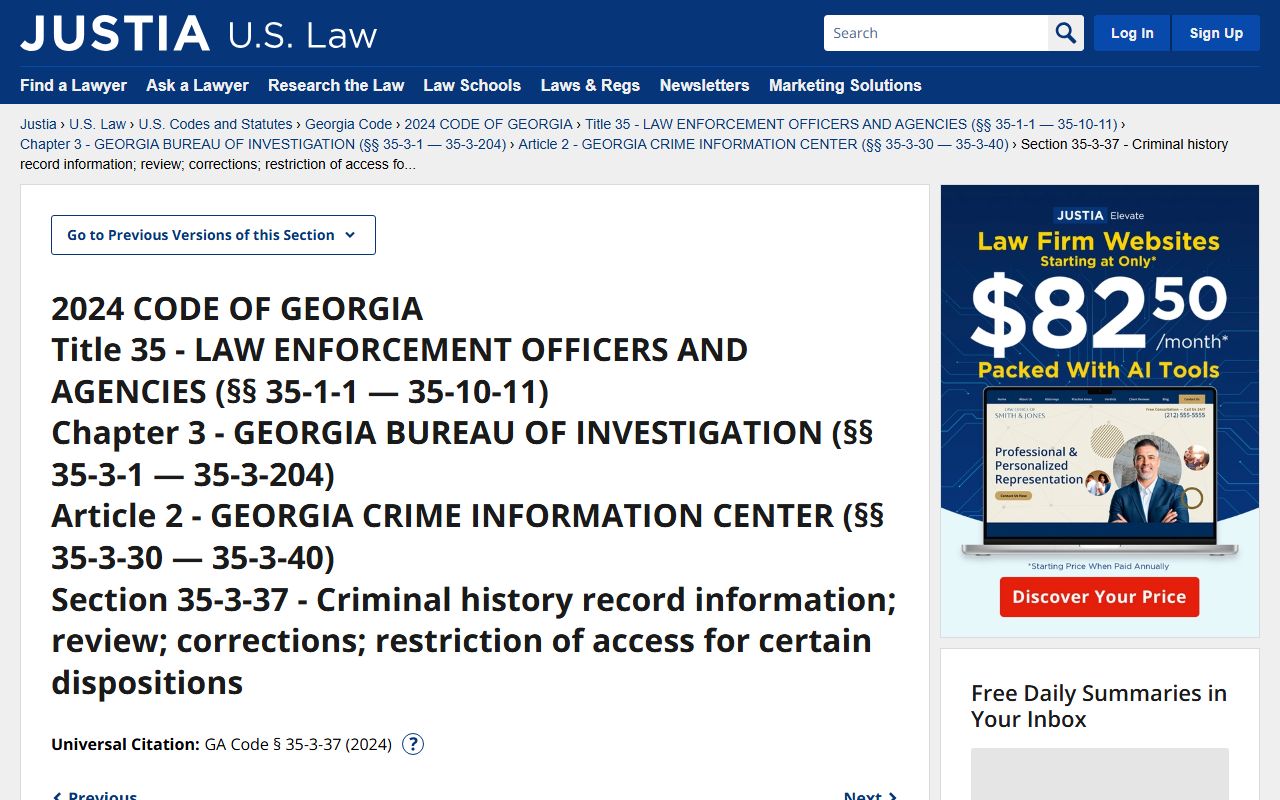
The statute source supports conservative wording about eligibility, prosecutor routing, and limits on public criminal-history access.
Public Access to Criminal Court Records
Adult criminal court records are generally public unless a law, court rule, sealing order, juvenile rule, or restriction applies. Georgia's open-records law, including O.C.G.A. 50-18-70, supports broad access to public records. O.C.G.A. 50-18-72 lists exemptions. For Jackson County criminal court records, the best channel is still the court custodian: the Clerk of Superior Court for records the clerk keeps, Magistrate Court for warrant and preliminary matters, and the municipal court for city citation cases.
Key Statutes:
O.C.G.A. 50-18-70 supports broad public inspection of public records.
O.C.G.A. 35-3-37 governs Georgia criminal-history record restriction.
Federal Criminal Cases Near Jackson County
Some criminal cases involving Jackson County residents are not Jackson County criminal court records. Federal prosecutions are handled through the U.S. District Court for the Northern District of Georgia, and Jackson County is in the Gainesville Division. Federal defendants, federal charges, federal appeals, and federal custody questions use federal systems such as PACER, CM/ECF, the U.S. Attorney's Office, U.S. Marshals, and the Bureau of Prisons.
The U.S. Attorney's Office for the Northern District of Georgia is the federal prosecutor source for Northern District cases.
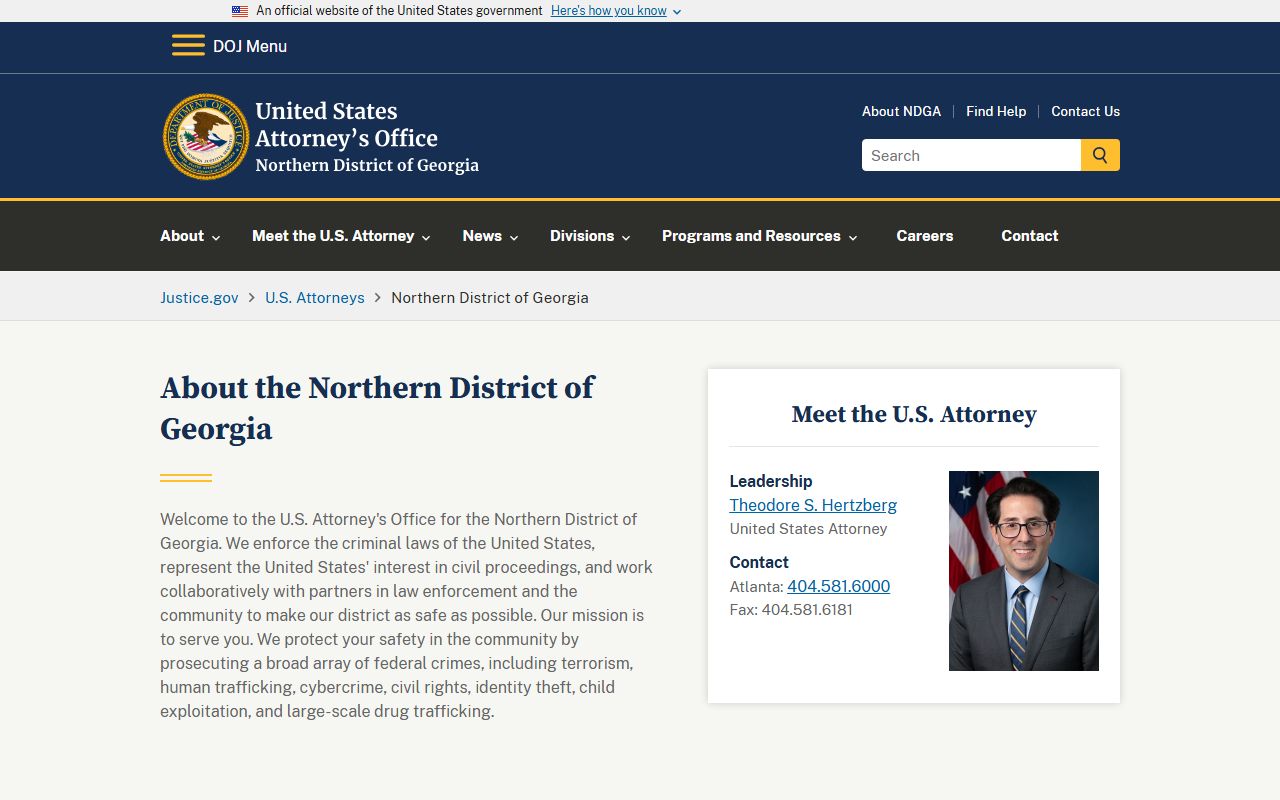
The U.S. Attorney source belongs only to federal criminal cases and does not replace the Jackson County Clerk's local court records path.
Restricted Jackson County Criminal Records
Restricted Jackson County criminal court records include juvenile matters, sealed court files, adoption-related material, protected identifiers, and criminal histories restricted under Georgia law. Juvenile delinquency and juvenile traffic questions route through the juvenile system and the Department of Juvenile Justice contact named in the research. Mental-health and evaluation-order material can be sensitive. A person trying to restrict a criminal record should identify the arresting agency, arrest date, prosecuting court, and disposition before contacting the prosecutor or arresting agency under the GBI process.
Important: Casual record lookup is not the same as an FCRA-compliant employment, tenant, credit, or insurance background check.