
Jackson County Court Docket Basics
A docket is the court's event log. In Jackson County, docket entries may show the filing date, party names, event type, hearing date, service status, motion, order, plea, disposition, sentence, bond event, or notice. The docket helps a user track progress, but it is not always the complete record. A full case file may include pleadings, exhibits, signed orders, decrees, warrants, certificates, sentencing papers, and copy/download options that are not visible in a short docket line.
Jackson County dockets follow the court level. Superior Court dockets cover felony, divorce, equity, land-title, major civil, and appeal matters. State Court dockets cover misdemeanors, many traffic cases, and civil actions unless Superior Court has exclusive jurisdiction. Magistrate Court dockets can involve small claims, evictions, bad checks, warrants, bond, and preliminary criminal matters. Probate dockets involve estates, guardianships, conservatorships, marriage, vital records, and weapons-carry matters. Municipal court dockets matter for city police citations and ordinance cases.
- Docket
- A chronological list of filings, hearings, and court actions.
- Entry
- One line on the docket that records a filing, hearing, order, or other event.
- Disposition
- The outcome of a case or charge, such as dismissed, judgment entered, guilty, or acquitted.
- Continuance
- A hearing or deadline moved to a later date.
How to Find Jackson County Court Dockets
For local Superior and State docket access, start with the Jackson County Clerk of Courts, the clerk's Case Search link, or Georgia Courts e-access, which routes Jackson Superior and Jackson State records through PeachCourt. The county says online search exists and can be free, but printing and copy access may require a username, password, and payment setup. For older civil or criminal cases, the clerk asks users to call ahead because pre-1998 records may require 24 hours of archive retrieval time.
- Identify whether the docket is Superior, State, Magistrate, Probate, Juvenile, Municipal, or federal.
- Use the clerk's case search or Georgia Courts e-access for Jackson Superior and Jackson State dockets.
- Have the case number, party name, court type, and approximate filing date ready.
- Open the case event list and read the dates, entry text, hearing settings, and disposition lines.
- Contact the correct court office when a docket is sealed, archived, missing, or not part of the online provider.
Federal dockets are separate. Jackson County is in the Northern District of Georgia, Gainesville Division, and federal cases use PACER or CM/ECF rather than the county clerk's local court search.
PACER is the official federal docket and document system for cases outside the Jackson County court structure.
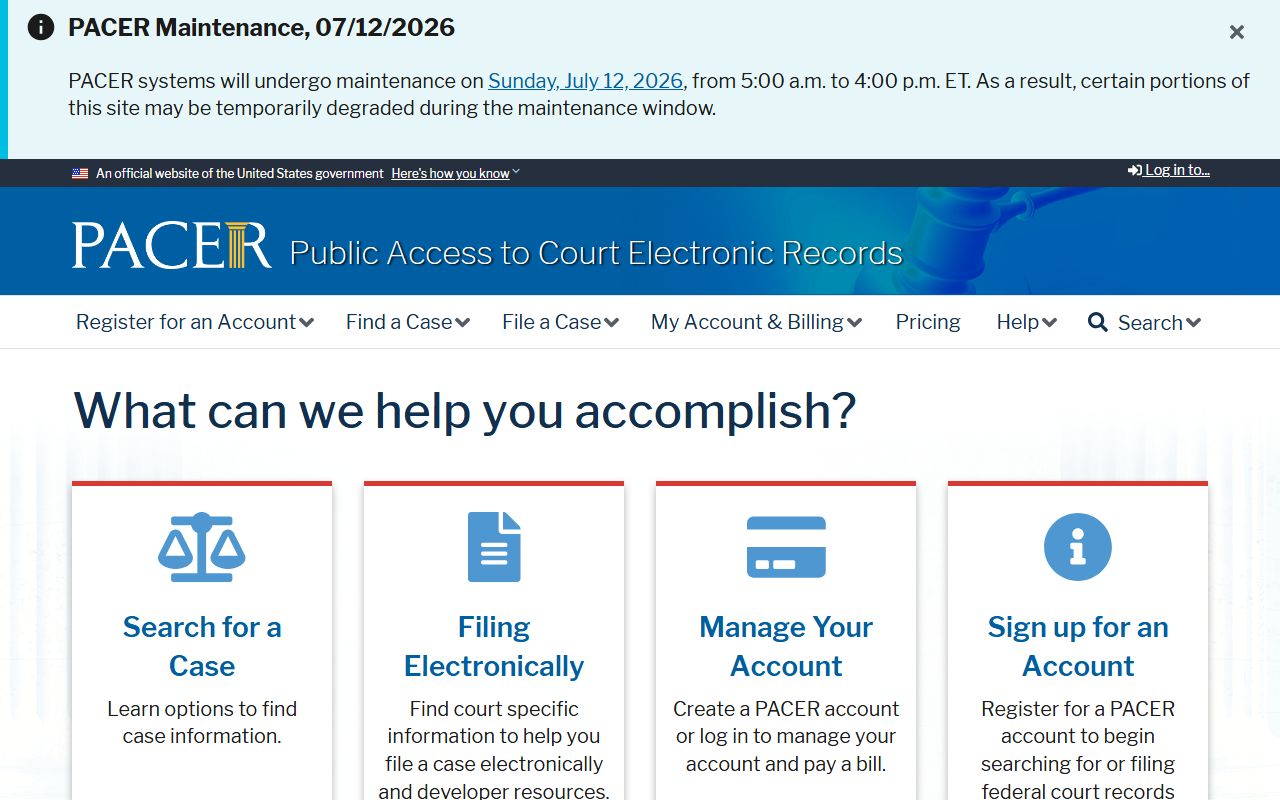
PACER matters only when the case is federal, such as a Northern District civil or criminal file, not a Jackson County Superior or State matter.
Sample Jackson County Docket Entry
The research file did not inspect a live public docket entry because the main provider path is account gated. The fields below are the safe case-event inventory for Jackson County dockets based on the clerk/provider route and the record inventory. When a field is missing online, the Clerk of Superior Court or the court that set the event is the better source than guessing from an unofficial listing.
| Field | What It Shows |
|---|---|
| Entry Date | The date a filing, hearing, order, notice, plea, judgment, or other event was entered. |
| Event Type | The short label for a motion, order, hearing, arraignment, service, sentence, or disposition. |
| Party Filing | The party, prosecutor, petitioner, respondent, or attorney tied to a filing when shown. |
| Hearing Date | The date and time of a scheduled court appearance or calendar setting. |
| Document Link | A copy or download option if the provider allows document access and payment setup. |
| Disposition | The outcome, such as dismissed, guilty plea, judgment entered, warrant issued, or case closed. |
Jackson County Court Docket Sources
Jackson County docket sources are split by court. The Piedmont Judicial Circuit website is important for Superior Court calendars, judges, staff, court officers, mediation, and court resources. The county Superior Court page lists judges and courthouse office details, while the clerk keeps the court records. State Court has its own jurisdiction over misdemeanors, traffic, and civil actions. Magistrate Court supplies many public-facing warrant, small-claim, dispossessory, and first-appearance records.
Calendar information can also come from the notice issued in the case. A printed summons, subpoena, traffic notice, bond condition, arraignment notice, or hearing order may name the court and room before an online docket updates. If a person is using the docket to avoid missing court, the safest method is to compare the online entry with the paper notice and call the court office that issued the setting. Municipal tickets are the most common place to misroute a search because the county Clerk handles county and Georgia State Patrol traffic records, while city police citations stay with the city channel named on the ticket.
- Superior Court: felony, divorce, equity, land/title, major civil, and transferred or appealed matters.
- State Court: misdemeanor, traffic, and civil actions unless Superior Court has exclusive jurisdiction.
- Magistrate Court: small claims, dispossessory cases, bad checks, warrants, bond, and preliminary hearings.
- Probate Court: estates, wills, guardianships, conservatorships, marriage, vital records, and weapons carry.
- Municipal courts: city police citations and ordinance cases in Arcade, Braselton, Commerce, Jefferson, Maysville, and Pendergrass.
Northern District CM/ECF is the federal electronic filing system, not a county docket source.
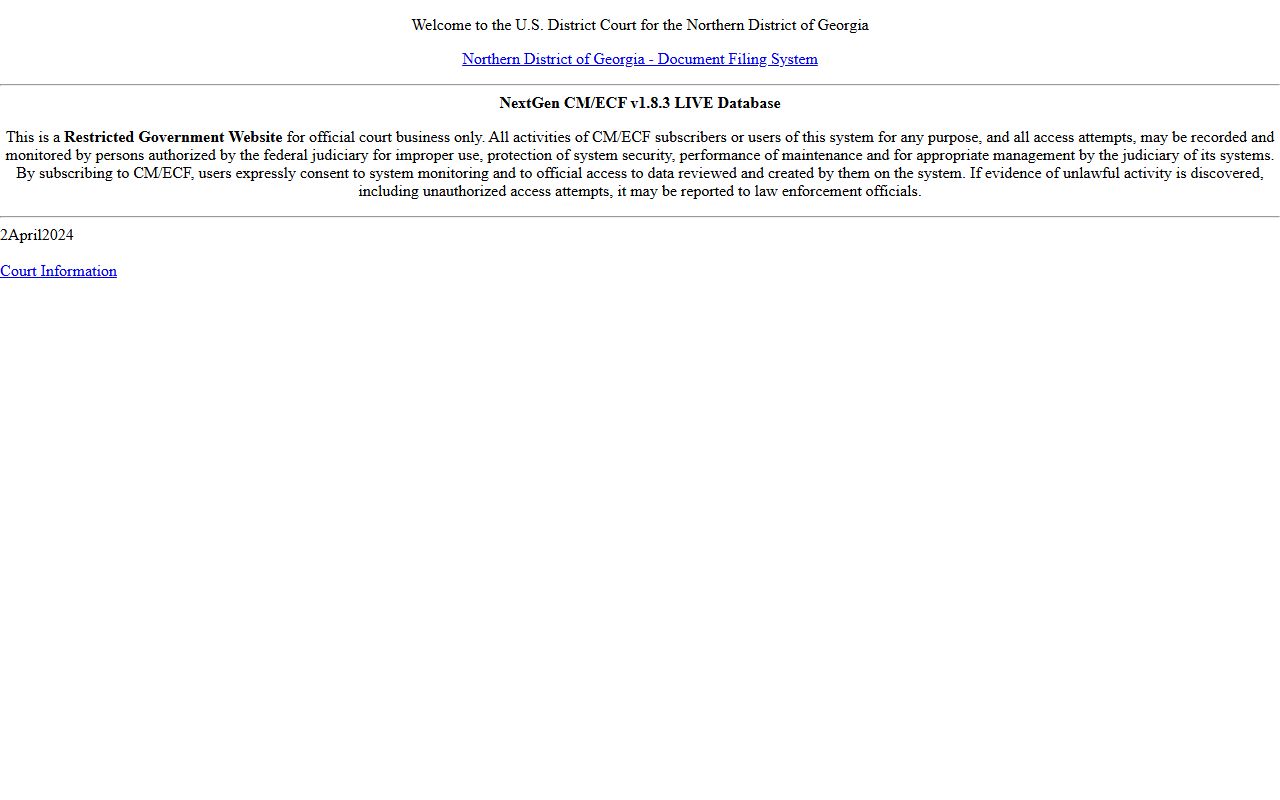
The CM/ECF source is useful for federal filings tied to Jackson County, while local court users should stay with the county or circuit channels.
The U.S. Bankruptcy Court for the Northern District of Georgia handles bankruptcy dockets separately from county civil cases.
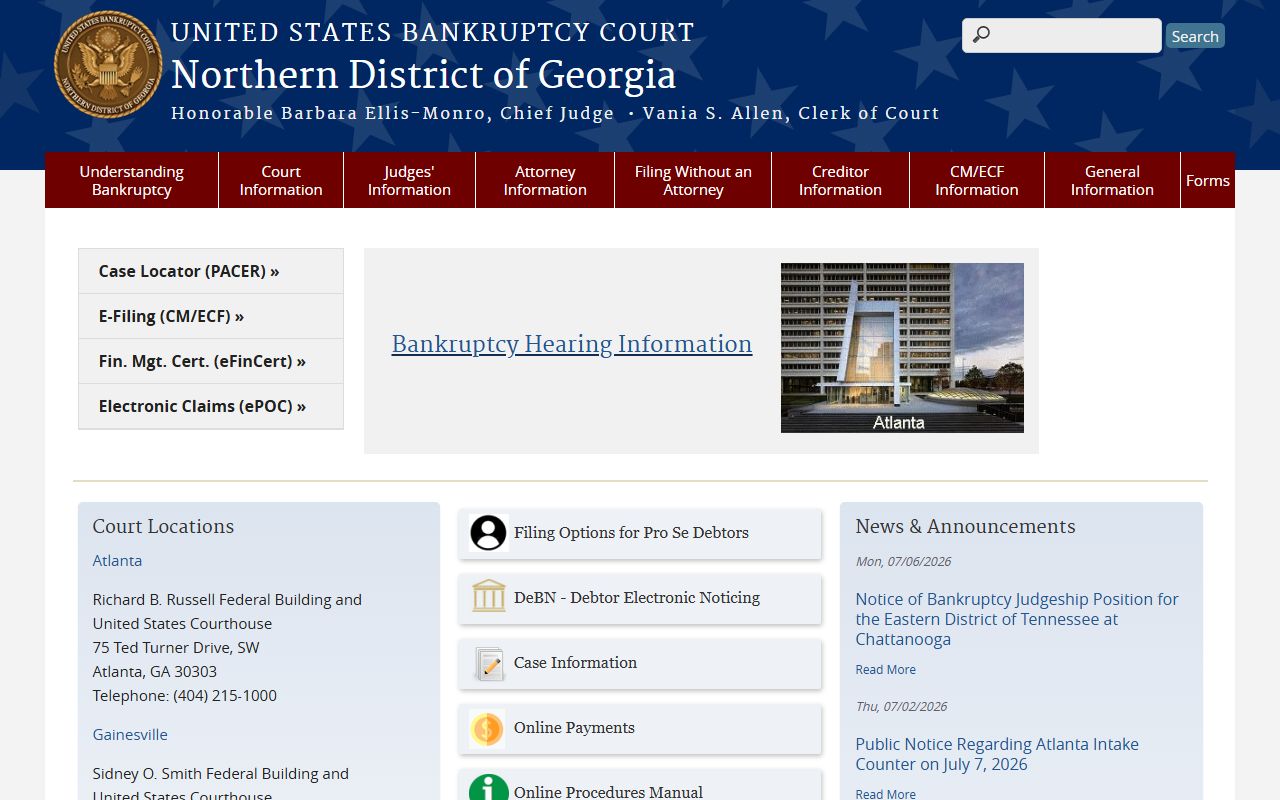
Bankruptcy docket searches should not be routed to Jackson County Superior, State, Magistrate, or Probate offices.
Jackson County Dockets vs Case Records
A docket is best for status. A full case record is best for detail. A Jackson County docket can show that a motion was filed, a plea was entered, or a hearing was continued. The full file may show the text of the motion, the signed order, the exhibit, the sentencing sheet, or the final decree. The distinction matters when a person needs proof for court, employment licensing, appeal review, title work, or a certified copy.
| Docket | Full Case Record | |
|---|---|---|
| Format | Chronological list of case events. | Documents, pleadings, orders, notices, and certified copies. |
| Best use | Check status, hearing date, disposition, or case progress. | Review legal claims, signed orders, sentence terms, or decrees. |
| Access | May be visible through case search or calendar resources. | May require account setup, payment, clerk request, or in-person review. |
| Limits | Can omit document text and sealed details. | Can include restricted or redacted material that is not public. |
CourtListener can help with free federal opinions and some docket material, but it is not the official county docket source.
CourtListener can supplement federal legal research, but certified Jackson County court records still come from the proper court custodian.
Reading Jackson County Court Dockets
Read docket entries in date order and watch for the court level. A State Court traffic docket is not the same as a municipal citation docket. A Magistrate warrant entry is not the final criminal case file. A Superior Court felony docket may show an accusation, indictment, arraignment, motion, plea, sentence, or appeal event. If a docket line says dismissed, nolle prosequi, guilty, acquitted, or judgment entered, that line is the outcome clue, but the document or sentencing order may still be needed to understand the legal effect.
Jackson County users should also watch for restricted entries. Juvenile matters, adoptions, sealed records, mental-health proceedings, protected identifiers, and record-restricted criminal history are not treated like ordinary public docket lines. If an online search omits a case that should exist, call the Clerk of Superior Court, the court that set the hearing, or the city court named on the citation. Do not assume a missing online docket means no case exists.
Docket terms often compress a large action into a short phrase. Service means the papers were officially delivered. A motion is a written request for the judge to act. An order is the judge's ruling. A de novo appeal from Magistrate civil court means the higher court hears the matter again rather than merely reviewing the lower court's paper record. Those terms affect how a Jackson County docket should be read, especially when a civil case, warrant matter, or criminal case moves between courts.
For federal docket review, keep the county boundary clear. The Gainesville Division of the Northern District includes Jackson County, but federal PACER and CM/ECF records are not kept by the Jackson County Clerk. Bankruptcy dockets use the Northern District bankruptcy court. Appeals from the Northern District route to the Eleventh Circuit. County docket searches should stay local unless the case caption, notice, or federal agency source shows that the matter is in federal court.
Note: A docket line can confirm case activity, but a certified copy is still the safer proof for official use.
The Eleventh Circuit Court of Appeals is the federal appellate court above the Northern District of Georgia.
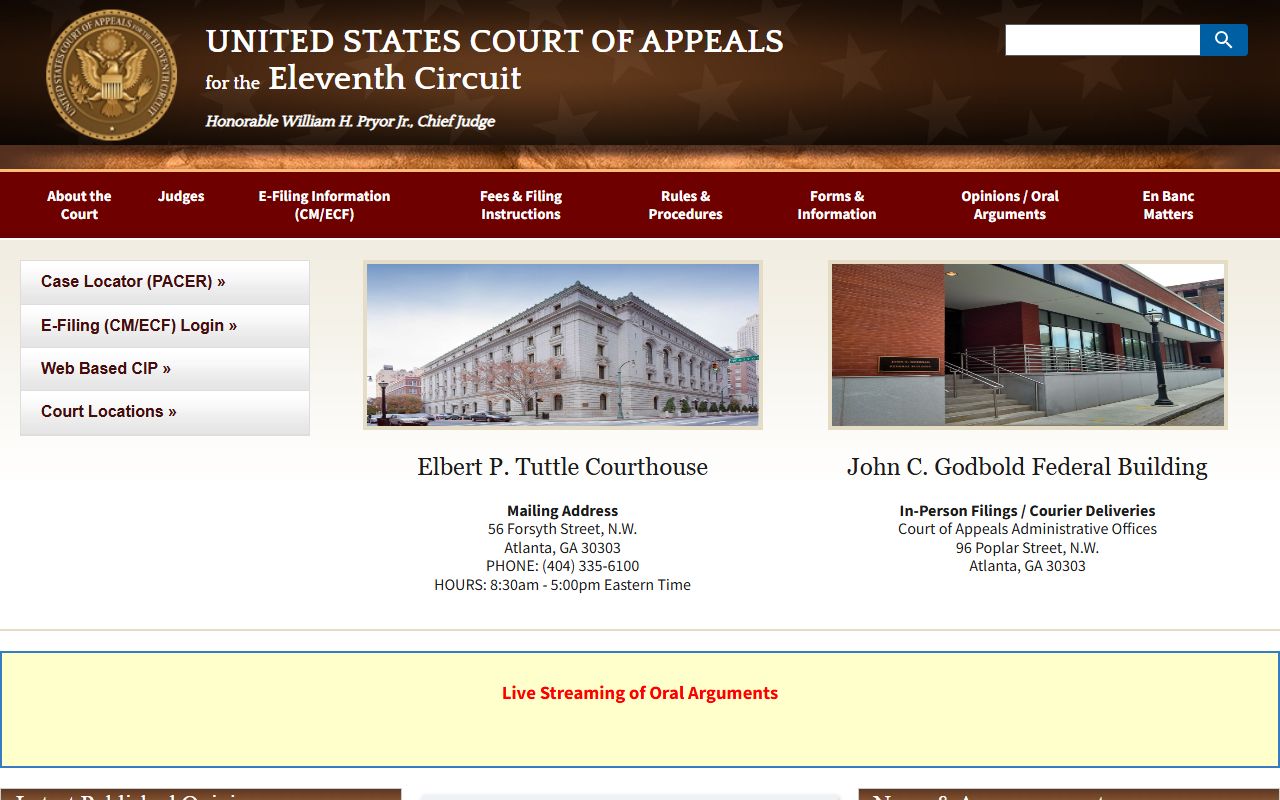
The Eleventh Circuit source applies after federal trial-court proceedings, not to local Jackson County trial court calendars.